


PhoenixFoam
2026
Sustainable Excellence Award
Winner
Regenerative Forest Systems (CRFS)
Designers / Creators / Authors / Leaders
Prof. Sofia Almeida, Dr. Miguel Correia, Dr. Aiko Matsumoto, Dr. Wei-Lun Chen
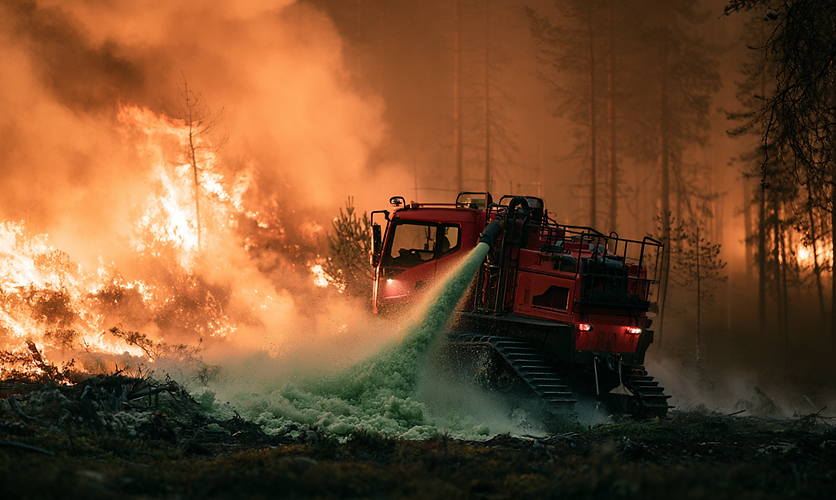
The moment a wildfire is extinguished is also the moment the next forest begins.
The extinguishing foam is formulated entirely from renewable plant-derived materials and naturally occurring biological components. During fire suppression, the foam forms a highly stable insulating blanket that rapidly reduces heat transfer, excludes oxygen and adheres effectively to vegetation and uneven terrain. Unlike conventional firefighting foams, the formula is free from PFAS compounds and decomposes naturally after deployment.
Following extinguishing, the foam gradually transforms into a moisture-retaining organic matrix. Plant cellulose fibres, alginate biopolymers and natural starches stabilise the burnt soil surface, reducing erosion while retaining rainfall. Biological particles improve soil structure and nutrient retention, while beneficial microorganisms and fungi stimulate the re-establishment of healthy soil biology. As the foam biodegrades, it becomes an active component of the forest's natural regeneration process, supporting seed germination and early plant establishment without leaving harmful residues.
The result is a firefighting medium that not only suppresses wildfire, but also provides the ecological foundation for rapid landscape recovery.
The project is really about designing the first 100 days of forest recovery. The foam is simply the vehicle that makes that possible. The breakthrough came not from inventing a new firefighting chemical but from redesigning what a firefighting foam is expected to do.
The consortium combines expertise in biomaterials from Japan, sustainable forestry from Portugal, and earlier research into PFAS-free plant-derived firefighting foams pioneered in Taiwan. By bringing together designers, ecologists, chemists, forestry specialists and wildfire professionals, the consortium has reimagined the role of firefighting materials—not simply to extinguish fires, but to initiate the ecological recovery of damaged landscapes.
The project also proposes a different relationship between citizens and public authorities.

